Farming on Mars: A Green Future on the Red Planet
As international efforts for traveling to and living on Mars increase, one of the biggest challenges that scientists and space planners face is how to provide sustainable food for astronauts. Growing plants in space is really necessary for long-term human stay outside of Earth. Sending food from Earth to Mars is expensive, time-consuming, and limited. That’s why making local and independent farming systems like hydroponics has become very important. Farming on Mars
Living Conditions of Mars and Farming Challenges
Climate and Soil Conditions of Mars
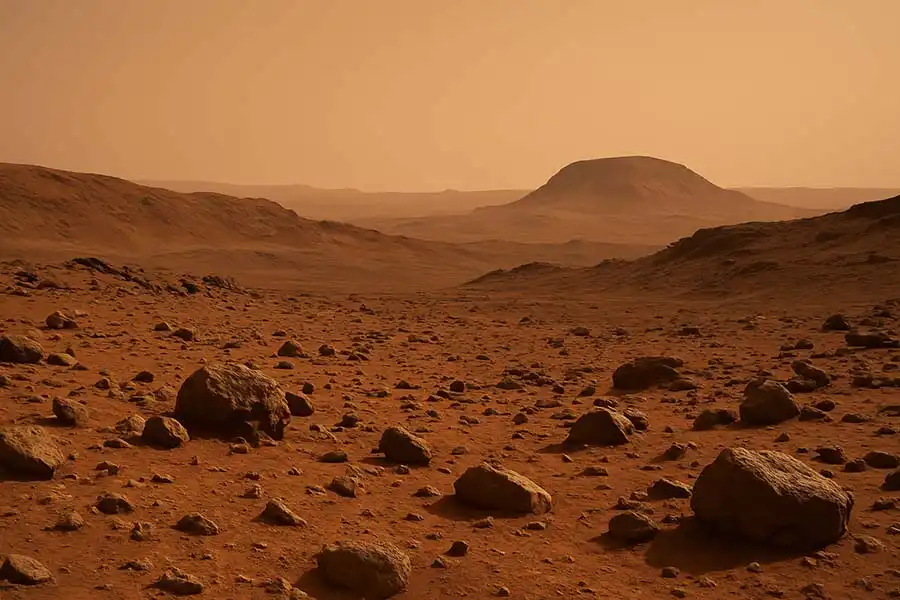
Mars is a cold, dry, and harsh planet. The average temperature is around -60°C, and in polar nights, it can go below -120°C. Its atmosphere is very thin and mostly made of carbon dioxide (more than 95%) and only about 0.13% oxygen. The surface pressure is less than 1% of Earth’s, which makes breathing and water evaporation very hard.
Is Martian Soil Good for Farming?
Martian soil, called “Regolith,” is a mix of sand, dust, and minerals. It doesn’t have any organic materials and contains toxic stuff like perchlorates, which are bad for both plants and humans. Also, it’s very dense and can’t hold water or nutrients naturally, so it’s not usable for farming unless it’s processed first.
Although Mars is kinda similar to Earth, it’s not really good for traditional farming:
| Factor | Mars Feature | Farming Challenge |
|---|---|---|
| Temperature | Avg. -60°C | Constant freezing, needs greenhouse heating |
| Atmosphere | 95% CO₂, low pressure | Not breathable, not good for natural photosynthesis |
| Light | Lower than Earth | Needs artificial or concentrated light |
| Soil | No organics, toxic perchlorates | Can’t be used directly |
| Radiation | No magnetic field | Needs protection from cosmic rays |
Why Greenhouses are Necessary on Mars
Greenhouses are structures that:
-
Control temperature, pressure, and humidity
-
Protect plants from space radiation and UV light
-
Allow recycling of water and nutrients
-
Can use both natural and artificial light
Possible Greenhouse Designs on Mars
-
Transparent Geodesic Domes: Strong against outside pressure, can pass light and keep heat
-
Underground Greenhouses: More protection from radiation, use LED or fiber optic light
-
Portable Greenhouses: For short missions, low energy use and automatic systems

How Plants Can Be Grown on Mars Greenhouse
Because soil can’t be used directly, new methods of soilless farming are suggested. Let’s compare them:
1. Hydroponics
Definition: Growing plants in water with nutrients, no soil.
Pros:
-
Precise control on nutrients and pH
-
Uses less water than traditional farming
-
High yield in small space
-
Good for closed environments like Mars
Cons:
-
Needs electricity for pumps and lights
-
Water contamination is risky
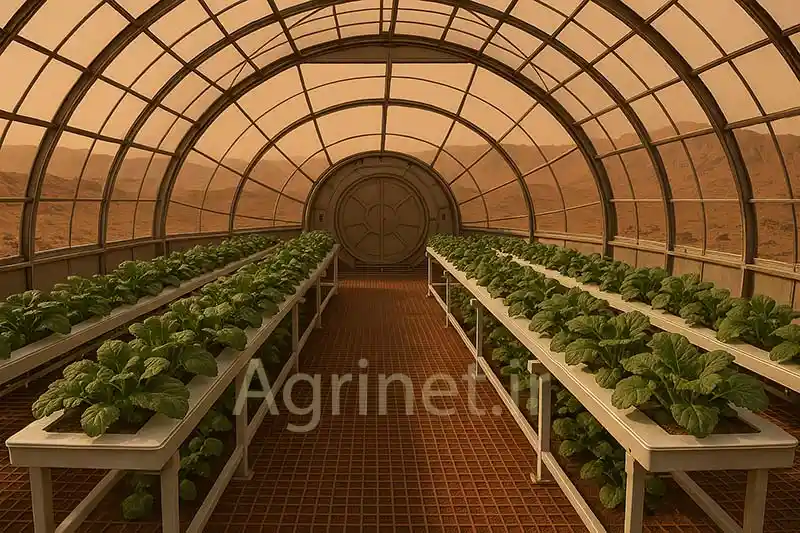
Use in Mars: Very useful and practical, especially in closed greenhouses and bio-modules.
2. Aeroponics
Definition: Roots are hanging in air and sprayed with nutrient mist.
Pros:
-
Very low water and nutrient use
-
Faster plant growth
-
Great for automatic systems
Cons:
-
Needs advanced and sensitive equipment
-
System failure can be serious
Use in Mars: Very effective but needs more tech and infrastructure.
3. Aquaponics
Definition: Mix of hydroponics and fish farming; fish waste is used as fertilizer.
Pros:
-
Produces both protein and plants
-
Closed and sustainable system
Cons:
-
Needs careful biological balance
-
More complex than hydroponics
Use in Mars: Good for long missions and human colonies, if environment is controlled well.
Best Crops for Mars Greenhouses
Plants that grow on Mars should be fast-growing, small-space friendly, stress-resistant, and have high nutrition.
| Category | Examples |
|---|---|
| Leafy Greens | Lettuce, spinach, arugula |
| Root Veggies | Potato, carrot, beet |
| Fruity Crops | Tomato, bell pepper, strawberry |
| Grains & Legumes | Wheat, lentil, chickpea |
| Medicinal Herbs | Basil, aloe vera, chamomile |
Mental Effects of Farming on Mars
Studies show that working with plants in space has good mental benefits:
-
Reduces astronaut stress
-
Makes them feel more connected and alive
-
Gives hope and motivation for survival and growth

Farming on Mars
Farming on Mars is not just sci-fi anymore. It’s becoming a real and important technology. Greenhouse farming, especially with methods like hydroponics and aeroponics, and all the space agriculture practices we test on space stations now, will be the foundation of food independence on Mars. These technologies not only help us live on Mars but also teach us how to farm smarter and more sustainably here on Earth too