The Most Important Diseases of Date Palm | A Complete Guide to Symptoms, Best Chemicals, and Control and Prevention Methods
Date palm diseases not only reduce crop yield, but in some cases can even cause the complete death of the palm. Because of the date palm’s special crown structure, trunk, root system, and long-term growth pattern, once it becomes infected with certain diseases, it is not easily cured. For this reason, prevention and early diagnosis are more important than any other measure. Knowing the most important date palm diseases is a prerequisite for fighting and controlling them.
Why Is It Important to Know Date Palm Diseases?
The date palm (Phoenix dactylifera), despite its high adaptability to harsh conditions, is vulnerable to a wide range of diseases. Factors such as climate change, poor orchard management, improper irrigation, and the movement of infected offshoots greatly increase the risk of disease outbreaks. Some of these diseases, such as Bayoud, are so destructive that they can wipe out an entire date plantation.
General Classification of Date Palm Diseases
The most important date palm diseases can be classified based on the affected part of the plant or the causal agent. In terms of cause, they are generally divided into the following groups:
- Fungal diseases
- Bacterial diseases
- Phytoplasma-related diseases
- Rot caused by environmental conditions and secondary infection
In terms of location, symptoms may appear in the following parts:
- Leaves
- Inflorescence and bunch
- Trunk
- Terminal bud
- Roots
- Fruit
The Most Important Fungal Diseases of Date Palm
1. Bayoud Disease of Date Palm
Bayoud disease, or Fusarium wilt, is considered one of the most dangerous date palm diseases in the world. In some date-growing regions, it has caused very serious losses. Bayoud is a quarantine disease and must be taken very seriously.
Causal agent
The causal agent is the fungus Fusarium oxysporum f. sp. albedinis.
Symptoms
The symptoms usually appear gradually:
- Whitening or graying of part of the leaves
- One-sided drying of leaves
- Symptoms progressing from older leaves to upper parts
- General weakening of the palm
- Severe reduction in growth and fruiting
- Complete drying of the crown in advanced stages

One of the important signs of this disease is the asymmetric or one-sided drying of parts of the crown.
Why it matters
- Effective treatment is extremely difficult
- It spreads rapidly under infected conditions
- It can be transferred through infected plant material and soil
- It may destroy many palms in a region
Prevention and management
- Use healthy offshoots and seedlings from reliable sources
- Observe quarantine principles
- Avoid moving infected soil and plant debris
- Disinfect orchard tools
- Remove severely infected palms properly under expert supervision
2. Inflorescence Rot of Date Palm
One of the most important date palm diseases is drying or rotting of the inflorescence, also known as khamj disease. It usually appears during flowering and, if severe, can significantly reduce fruit set and sharply lower orchard yield.
Causal agent
The main causal agent is usually the fungus Mauginiella scaettae.
Symptoms
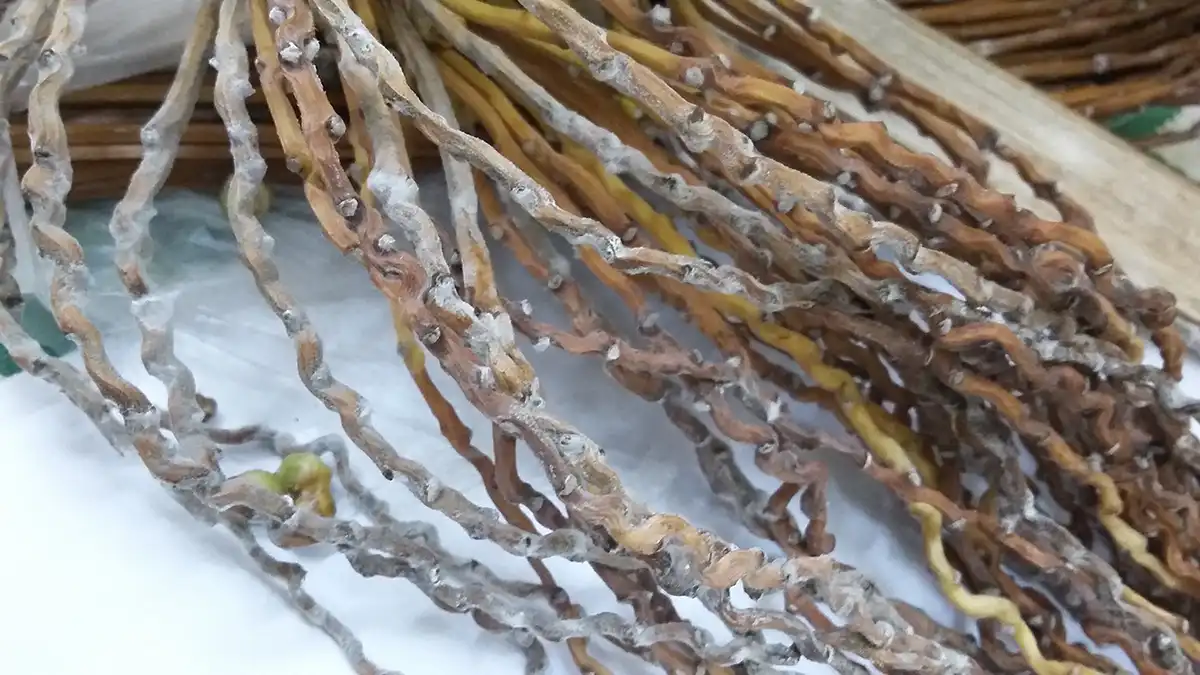
- Brown or dark spots on the flower spathe
- Gradual rotting of the inflorescence
- Flowers failing to open normally
- Bunch deformity
- Reduced pollination and fruit set
- Drying of part or all of the bunch
In some cases, growers think the problem is poor pollination, while in fact the main cause is inflorescence infection.
Favorable conditions
- High humidity
- Rain at the time of inflorescence emergence
- Poor ventilation in the crown
- Remaining infected debris in the orchard
Prevention and control
- Remove and destroy infected inflorescences
- Maintain orchard hygiene and collect plant debris
- Prune properly to improve air circulation
- Disinfect pruning and pollination tools
- Use approved fungicides recommended by an expert at the right time
3. Black Scorch of Date Palm
Black scorch is an important and well-known date palm disease. It can affect different parts of the plant and, in severe cases, cause serious damage to the crown and palm growth.
Causal agent
The disease is usually caused by Thielaviopsis paradoxa, which in some sources is classified under newer taxonomic names.
Symptoms
- Formation of black necrotic areas on tissues
- Rot in wounded parts of the trunk
- Infection at cut leaf bases
- Involvement of inflorescences or young parts
- Drying of tissues and reduced growth
If the disease reaches sensitive parts such as the terminal bud, the risk becomes much greater.

Aggravating factors
- Wounds on the trunk and leaves
- Improper pruning
- High humidity
- Use of contaminated tools
- General weakness of the tree
Control methods
- Prevent damage to the trunk and crown
- Fully disinfect tools
- Remove infected tissues
- Disinfect cut surfaces
- Improve nutrition and overall palm health
4. Bud Rot of Date Palm
The terminal bud, or heart of the palm, is a vital part of the tree. If the disease reaches this area, the entire palm may be destroyed. For this reason, bud rot is considered one of the most important date palm diseases.
Causal agents
Species of Phytophthora (mainly P. palmivora) and other soil-borne fungi are among the most important causal agents of bud rot.
Symptoms
- Softening and rotting of the central crown tissue
- Foul smell
- Easy detachment of the central leaf
- Discoloration of the palm heart tissue
- Stop of new leaf growth
- Gradual death of the tree if the disease advances
Predisposing factors
- Rain or improper irrigation
- Water standing in the crown
- Wounds caused by pruning
- Secondary infection after mechanical injury
Control measures
- Prevent water from remaining in the crown
- Prune properly
- Quickly remove infected tissue
- Disinfect the infected area
- Improve orchard sanitation
5. Leaf Spot Diseases of Date Palm
Leaf spots are relatively common diseases of date palm. Although they are not always as dangerous as trunk or root rots, severe infection can reduce photosynthesis, weaken the tree, and reduce growth quality.
Causal agents
Various fungi may cause leaf spots, including:
- Alternaria
- Helminthosporium
- Other opportunistic fungi
Symptoms
- Small yellow, brown, or black spots on leaflets
- Gradual spreading of the spots
- Merging of spots under severe infection
- Drying of leaf tips or margins
- Loss of crown vigor
Favorable conditions
- High humidity
- Poor ventilation
- Dense crown
- Infected leaves remaining on the tree or orchard floor
Control and management
- Prune severely infected leaves
- Remove infected debris
- Improve air circulation in the orchard
- Adjust irrigation
- Use fungicides only when necessary and under expert supervision
6. Graphiola Leaf Spot (False Smut)
Causal agent: Graphiola phoenicis
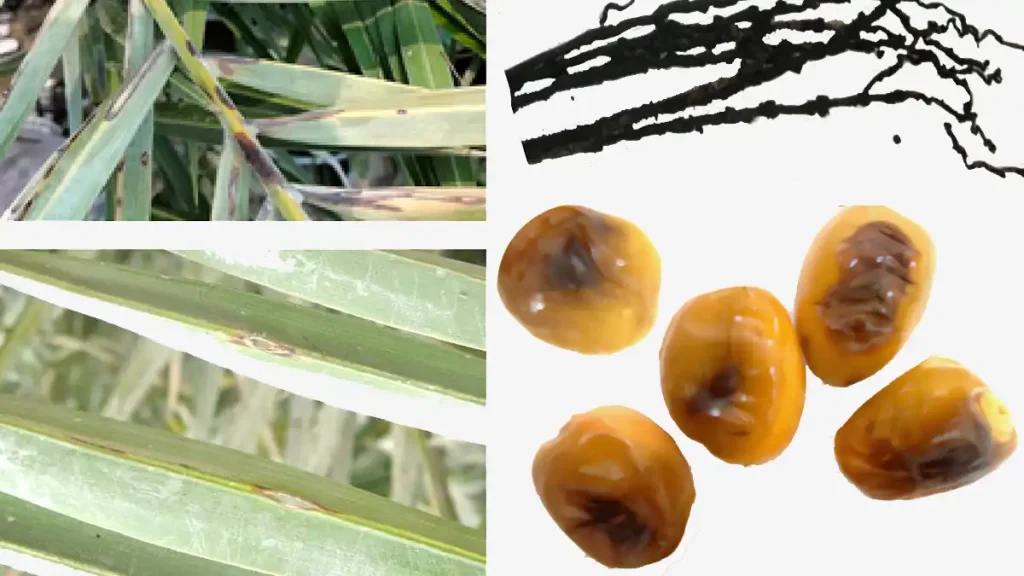
This fungal disease is common in orchards with high humidity and foggy conditions. Although it is usually not fatal, it weakens the tree and reduces yield by lowering photosynthetic area.
Symptoms: Small, raised, yellowish pustules appear on both surfaces of the leaf and later turn dark brown. When the epidermis ruptures, a mass of yellow or orange spores is released.
Control method: Prune old and infected leaves and remove them from the orchard, reduce planting density, and apply copper-based fungicides or mancozeb at early stages. Varieties such as ‘Zahedi’ and ‘Deri’ show relatively greater resistance.

The Most Important Date Fruit Diseases
7. Fruit Rot of Date Palm
Fruit rot occurs during ripening stages (khalal, rutab, and tamr) under high humidity, autumn rains, wind injury, and excessive fruit density.
Causal agents: A complex of fungi such as Aspergillus niger, Alternaria alternata, Penicillium spp., and Fusarium spp.
Symptoms: Brown to black spots on the fruit, black or green mold growth, shriveling and souring, and mummification of some fruits.
Control method: Cover bunches with waterproof net bags (especially in sensitive varieties such as Mazafati), reduce humidity during ripening, and spray approved, low-risk fungicides such as potassium bicarbonate or copper compounds during the early stages of fruit development.
8. Pink Rot of Inflorescence
This disease destroys date bunches before fruit set in years with a wet and rainy spring.
Causal agent: Nalanthamala vermoesenii (formerly Gliocladium vermoeseni)
Symptoms: Soft, water-soaked rot on the inflorescence accompanied by the growth of pink spore masses. The bunches break and fall easily, and no fruit is formed.
Control method: Remove infected inflorescences, improve air circulation in the palm crown, and apply preventive sprays before spathe opening with systemic fungicides such as propiconazole or tebuconazole.
The Most Important Phytoplasma Diseases of Date Palm
Phytoplasmas are specialized, cell wall–less bacteria that live in the phloem vessels. They can cause dangerous diseases in date palm.
1. Lethal Yellowing
This disease is common in some parts of Africa and America and can also attack date palms. It is caused by a phytoplasma transmitted by sap-sucking insects such as leafhoppers.
Symptoms
- Progressive yellowing of leaves followed by browning
- Premature fruit drop
- Reduced growth
- Crown drying
- Death of the terminal bud
- Complete death of the palm in the final stages

Disease management
- Use resistant rootstocks or varieties in affected areas
- Control date palm leafhopper vectors
- Remove infected palms
- Follow hygiene and quarantine measures
- Inject antibiotics such as tetracycline under expert supervision, though this is only temporary
2. Al Wijam Disease (Leaf Bend)
Al Wijam disease is common in Saudi Arabia and some Gulf countries. It is associated with severe leaf twisting and bending, dwarfing, sterility, and gradual decline. Some studies identify phytoplasma as the main cause, although nutritional disorders may also be involved.
Control: Isolate diseased palms, avoid using offshoots from suspicious palms, maintain optimal nutrition, and control potential vectors.
Bacterial Diseases: Less Important and Less Known
Unlike many crop plants, bacterial diseases are not very common in date palm. There are occasional reports of bacterial leaf spots caused by Pseudomonas or bacterial soft rots under special conditions. However, their economic importance is much lower than that of fungal and phytoplasma diseases. Orchard hygiene and tool disinfection are the best measures against these agents.
Physiological Disorders (Non-parasitic Diseases) of Date Palm
Sometimes symptoms on date palm are caused by non-living factors such as environmental stress, nutrient deficiency or toxicity, and genetics. These are also considered “diseases” in the broad sense and can be as damaging as infectious agents.
1. Black Nose
In large or soft varieties such as ‘Medjool’ and ‘Barhee’, the fruit tip turns black and dries at early growth stages, and the fruit may crack. The cause is large fluctuations in humidity, sudden rains, and excessive water uptake.
Management: Regular irrigation scheduling and prevention of moisture shock, bunch bagging, and calcium spraying during fruit set.
2. Fruit Cracking
Longitudinal or transverse cracks in the fruit skin are mainly caused by sudden rainfall after a dry period. Calcium or potassium deficiency may also worsen the problem.
Management: Balanced nutrition with emphasis on calcium and potassium, maintaining uniform soil moisture, and using more resistant varieties.
3. Bunch Drying and Sterility
Sometimes bunches dry out without fungal or bacterial infection. Factors such as extreme heat during pollination, nutrient deficiencies (especially boron and zinc), general palm weakness, salinity stress, and improper pollination contribute to this problem.
Management: Provide micronutrients based on soil and leaf analysis, choose the right pollination time, and ensure adequate irrigation to reduce heat stress.
4. Hard Fruit
Fruits that do not develop into normal rutab and remain hard and dry indicate a disorder in nutrient transport or hormonal imbalance. This is often observed in palms under salinity stress or zinc deficiency.
Why Is Accurate Diagnosis of Date Palm Diseases Important?
In date palm, the symptoms of many diseases are similar. For example, leaf yellowing may be caused by root rot, fungal diseases, nutritional weakness, or environmental stress. Bunch drying may also be caused by inflorescence rot or other problems. For this reason, visual observation alone is not always enough for accurate diagnosis.
In professional cases, confirming the diagnosis may require:
- Careful review of orchard history
- Evaluation of irrigation patterns
- Examination of the crown, trunk, roots, and bunches
- Sampling infected tissue
- Laboratory testing
This is especially important for dangerous and quarantine diseases.
The Most Important Ways to Prevent Date Palm Diseases
As mentioned, in many date palm diseases, prevention is far more effective and less expensive than treatment. The most important preventive measures are:
-
Use healthy seedlings and offshoots
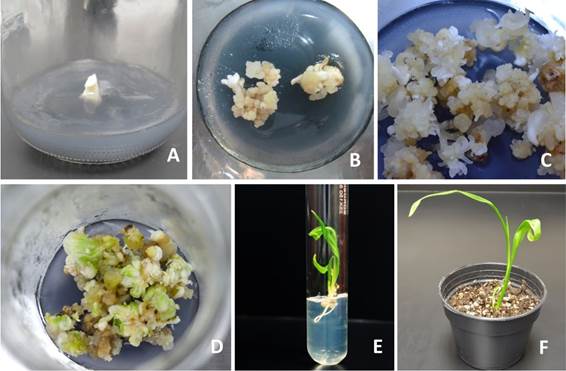
One of the main ways to prevent disease entry into the orchard is to use tissue-cultured date seedlings or certified disease-free offshoots.
-
Disinfect tools
Pruning, cutting, and offshoot removal tools should be disinfected after each tree to prevent transmission.
-
Prune properly and hygienically
Pruning should be done carefully and at the right time to avoid unnecessary wounds.
-
Manage irrigation and drainage
Excess irrigation and poor drainage are among the main factors that worsen root and trunk diseases.
-
Remove infected debris
Infected leaves, bunches, and tissues should not be left in the orchard.
-
Strengthen overall tree health
Balanced nutrition, salinity management, soil improvement, and prevention of environmental stress increase palm resistance.
-
Monitor the orchard continuously
Regular inspection helps identify disease at an early stage.
Common Mistakes in Managing Date Palm Diseases
In many orchards, several management mistakes worsen disease outbreaks:
- Uncontrolled and excessive use of fungicides, which causes resistance
- Neglecting tool disinfection
- Using infected or unreliable offshoots
- Over-irrigation
- Ignoring early symptoms
- Leaving infected debris in the orchard
- Delaying the removal of diseased parts
Avoiding these mistakes can reduce a large share of losses.